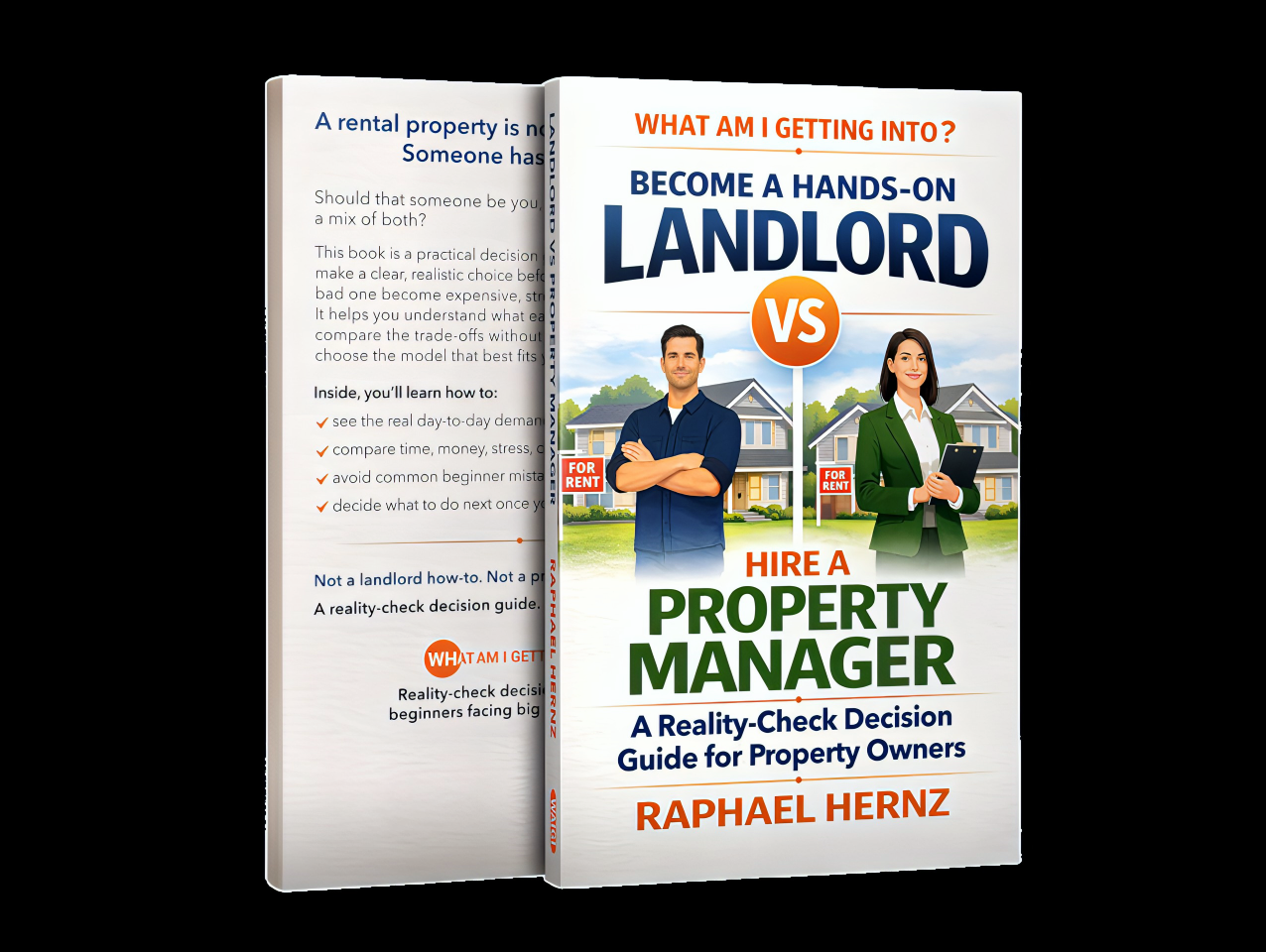
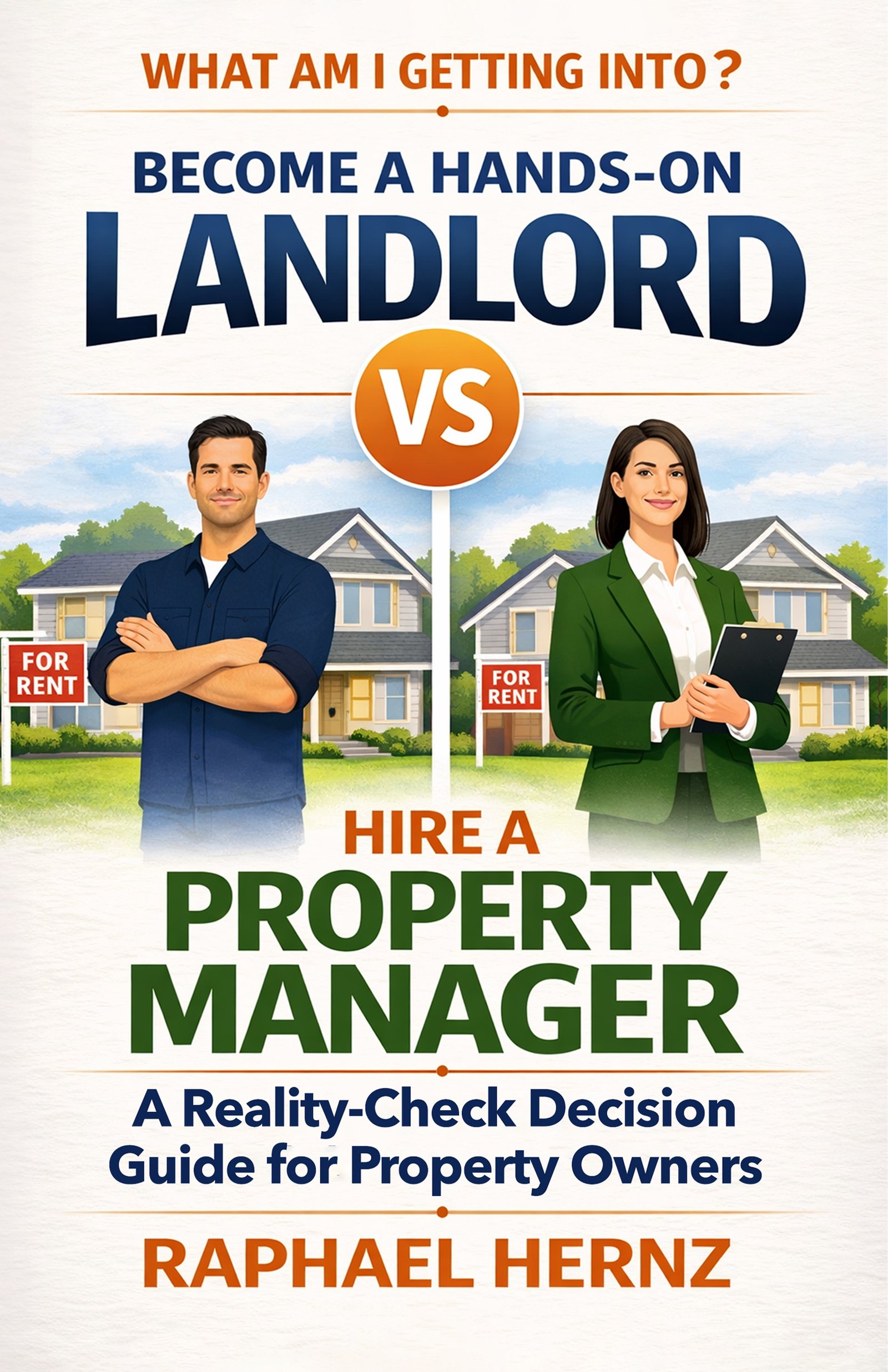
Become a Hands-On Landlord
vs Hire a Property Manager
A rental property is not self-managing. Someone has to run it.
Should that someone be you, a property manager, or a mix of both?
This book is a practical decision guide for people trying to make a clear, realistic choice before the consequences of a bad one become expensive, stressful, or hard to unwind.
It helps you understand what each path actually involves, compare the trade-offs without fantasy or sales talk, and choose the model that best fits your life.
What You’ll Get from Each Chapter
Chapter 1: The Rental Business From 30,000 Feet
Before you decide whether to manage a rental yourself or hire help, it helps to understand what you’re actually taking on. This chapter gives you a clear big-picture view of rental ownership as a working system, not a fantasy about passive income and not a pile of technical details. You’ll see the core moving parts that drive most results, most stress, and most surprises.
You’ll also learn the difference between what can be delegated and what still belongs to the owner no matter who handles the day-to-day work. That perspective makes the rest of the book more useful, because better decisions usually start when you stop asking, “Can I rent this out?” and start asking, “What kind of role am I realistically prepared to take on?”
Chapter 2: Hands-on Landlord, Explained
This chapter helps readers understand what self-managing a rental really asks of them after the rent is collected and the lease is signed. It clarifies the day-to-day role behind DIY landlording: making judgment calls, setting boundaries, responding to problems, documenting decisions, and following through when ordinary issues become inconvenient.
For owners attracted to saving money or keeping control, this chapter gives a grounded way to test whether hands-on management actually fits their temperament, schedule, distance from the property, and tolerance for conflict. It helps the hesitant buyer see that DIY can work, but only when they are prepared for the responsibility behind the control.
Chapter 3: Hiring a Property Manager, Explained
This chapter helps readers understand what they are really buying when they hire a property manager: not freedom from ownership, but a system that handles much of the day-to-day work. It clarifies which responsibilities can be delegated, which ones remain with the owner, and why reduced involvement still requires informed oversight.
For owners who feel stretched, uncertain, or tired of direct tenant and maintenance issues, this chapter gives a practical way to judge whether professional management is likely to help. It also helps readers avoid a common mistake, because apparently “hire someone and disappear” remains humanity’s favorite business plan: assuming a polished process means the property is automatically being managed well.
Chapter 4: The True Trade-Offs
Here, you’ll find the clearest comparison between self-managing, hiring a property manager, and using a hybrid approach. Instead of treating the decision as “cheap versus expensive” or “control versus convenience,” it shows the real trade-offs that shape the owner’s experience: time, control, risk, cost, and competence.
For a hesitant owner, this chapter helps turn a vague preference into a clearer choice. It shows why every option solves some problems while creating others, and why the right path is usually the one whose burdens you can actually carry. That kind of clarity is annoyingly rare, which is why people keep making expensive decisions with the confidence of a raccoon crossing a highway.
Chapter 5: Money at a First-Time Landlord’s Level
This chapter helps readers think about rental money beyond the simple question of whether rent covers the mortgage. It clarifies why a property can look profitable during quiet months and still become stressful when vacancy, turnover, repairs, insurance, taxes, or larger replacements arrive, because apparently money prefers ambush tactics.
For owners comparing DIY, property management, or hybrid, this chapter shows how each path affects the total cost of ownership, not just the obvious monthly fee. It helps a hesitant buyer understand whether the property has enough financial resilience to support the management model they are considering, and avoid mistaking short-term cash flow for long-term stability.
Chapter 6: Legal & Liability Reality Check
Small rental problems can become expensive when they are handled casually, inconsistently, or too late. This chapter helps readers recognize the everyday situations that create legal and liability exposure, such as delayed repairs, weak documentation, unclear notices, deposit mistakes, access issues, and safety concerns.
For owners choosing between DIY, property management, or hybrid, this chapter makes the risk side of the decision easier to see. It does not try to turn the reader into a legal expert. Instead, it helps them understand which responsibilities require serious attention, what can go wrong under each management model, and why basic owner awareness still matters even when help is hired.
Chapter 7: Common Failure Modes
Rental problems usually start as patterns before they become crises. This chapter helps readers recognize where trouble most often begins: weak screening, soft boundaries, delayed maintenance, poor documentation, and vague communication. Tiny dominoes, naturally, because apparently one large obvious warning sign would be too merciful.
For owners comparing DIY, property management, or hybrid, this chapter shows how each model can fail in different ways. It helps the reader identify their most likely weak point before choosing a path, so they can avoid selecting a management setup that quietly exposes the exact problem they are least prepared to handle.
Chapter 8: Choosing Your Path
By this point, the reader has seen what each management model asks of them. This chapter turns that understanding into a practical decision by helping them weigh their real constraints, priorities, temperament, and most likely failure points instead of choosing based on hope, ego, or fear.
For a hesitant owner, this is where the book becomes especially useful. It helps them decide whether hands-on, property management, or hybrid is the most sustainable fit right now, and gives them a clearer way to explain that choice before they commit time, money, or trust to the wrong setup.
Chapter 9: The Hybrid Option
Some owners do not fit neatly into “do everything yourself” or “hand everything off.” This chapter helps readers understand how hybrid management can work when they want to keep certain decisions close while outsourcing the tasks most likely to drain time, create confusion, or expose their weak spots.
For a hesitant owner, the value is practical clarity. This chapter helps them see hybrid as a defined operating model, not a vague compromise, because apparently “somebody will handle it” remains the official slogan of future chaos. It shows why clear roles, clean handoffs, approval rules, and communication paths matter before a split arrangement can actually reduce stress instead of rearranging it
Chapter 10: What to Do After
After the reader chooses a management path, this chapter helps turn the decision into a usable first plan. It gives each type of owner, hands-on, property manager, or hybrid, a clear sense of what to set up first so they are not relying on vague intentions, scattered research, or the ancient human ritual of “I’ll figure it out later.”
The value is focus. Instead of trying to become an expert overnight, the reader learns what their next responsibilities actually are: what to learn, who to talk to, what systems to create, and what expectations to define. It keeps the book grounded as a decision guide while helping the reader leave with a practical next move.
Extra Materials PDFs
We'll send you the PDFs and the newsletter by email. You can unsubscribe anytime.
(Only once a month, and we don't sell your email.)
Thank you!
Check your email! We sent the download links to email.
Extra Materials
Property Manager Interview Worksheet
Compare property managers with clarity, not guesswork. This printable worksheet helps you capture the answers that matter, spot warning signs early, and make a grounded decision after multiple interviews—without relying on memory or sales impressions.
Appendix A: Master Question Bank
A practical collection of high-value questions to help you think more clearly before committing to Hands-on (DIY), a Property Manager, or Hybrid. Use it to spot blind spots, compare options, and ask better questions before mistakes become expensive.
Glossary: Practical Terms, Not an Encyclopedia
Clear, plain-English definitions of the rental terms beginners actually run into when reading leases, comparing managers, or researching online. Built to reduce confusion, speed up decision-making, and help you understand what matters without drowning in jargon.
Vendor Bench Builder + Property Access Sheet
A simple printable tool to help you start building a basic list of vendors before something breaks. Use it to identify your first-call and backup options for common rental issues, then note the basic access details a vendor would need for each property. This is a starting point: enough structure to reduce scrambling, spot vendor gaps, and take the next practical step with more confidence.
Rental Readiness Checklist
A simple one-page checklist to help you spot basic gaps before listing a property for rent. Use it to review condition, money, legal/process, leasing, management, and vendor readiness without turning preparation into a full landlord bootcamp. It’s not meant to cover everything.
Questions to Ask Professionals
A practical first-contact guide for talking with attorneys, insurance agents, CPAs, contractors, leasing professionals, and property managers. It helps you ask better early questions, especially the ones beginners often forget, without trying to turn you into an expert. Use it to make those first conversations clearer, more productive, and less awkward.
Maintenance Triage Guide
A simple printable guide for sorting rental maintenance issues by urgency, deciding what needs immediate action, and avoiding costly delays. Use it to respond more calmly, communicate clearly, and keep small problems from turning into bigger ones.